

About This Procedure
The Heart Center at Franciscan Health Indianapolis was first in the world to use groundbreaking technology that allowed patients to repair and re-grow healthy heart tissue. Keeping your own valve helps preserve natural heart function, often shortens hospital stays, speeds recovery, and lowers complication rates. Surgeons use advanced imaging and minimally invasive techniques to customize repairs, reducing the need for long-term blood thinners required with some artificial valves. Many patients return to normal activity sooner, with improved quality of life supported by ongoing clinical follow-up and research at the center.
Aortic valves that are leaking but have adequate leaflets (flexible flaps of thin tissue that regulate blood flow from the left ventricle to the aorta) are spared during aortic valve repair surgery as well. As the patient’s valve function has been restored, the need for long-term anticoagulation (blood thinning) is minimized, and the risks associated with deterioration of biologic valves derived from animal tissue are substantially reduced. Heart valve repair offers a more durable, patient-centered outcome with fewer ongoing medication requirements and a lower likelihood of future valve-related complications compared to replacement.
Heart valve surgeons at Franciscan Health use a number of different heart valve repair procedures, depending on the needs of the patient. Some of those procedures are:
- Commissurotomy: Fused valve leaflets are separated to widen the heart valve opening.
- Decalcification: Calcium deposits are removed to allow the leaflets to be more flexible and close properly.
- Reshape leaflets: If one of the leaflets is floppy, a segment may be cut out and the leaflet sewn back together, allowing the heart valve to close more tightly.
- Chordal transfer: When the front (anterior) leaflet of the mitral valve is floppy or not well supported, the supporting chords (thin, fibrous “heartstrings” that help the valve close) are moved from the back (posterior) leaflet to the front leaflet. After that, the back leaflet is fixed using a small rectangular (quadrangular) resection.
- Annulus support: If the valve annulus (the ring of tissue supporting the valve) is too wide, it may be reshaped or tightened by sewing a ring structure around the annulus. The ring may be made of tissue or synthetic material, including ECM.
- Patched leaflets: The surgeon may use tissue patches to repair any leaflets with tears or holes.
How do I get connected to care?
If you have any concerns about your heart health or past heart procedures, be sure to check with your primary care physician or cardiologist.
If you or someone you know is experiencing signs and symptoms of a heart attack, dial 911 immediately and, when necessary, administer CPR.
Our Locations
Appointments
Request An Appointment
Appointments
Request An Appointment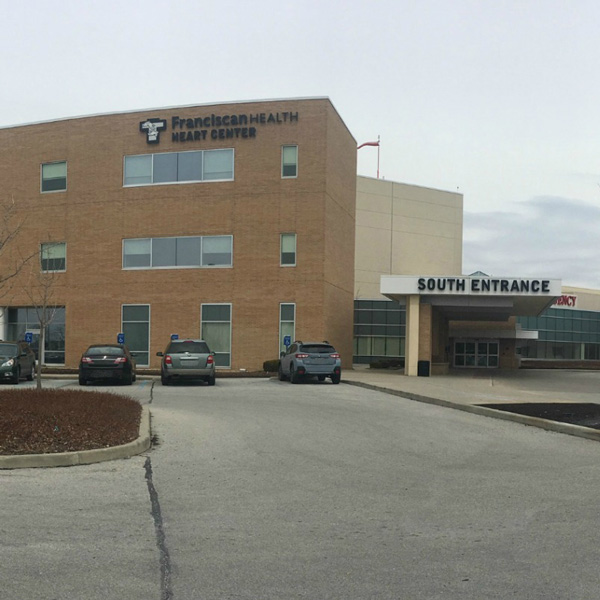
Address
1701 S. Creasy Lane
Lafayette, IN 47905
Fax: 765-502-4421
Appointments
Request An Appointment


