

About This Procedure
Franciscan Health offers minimally invasive heart valve replacement surgery to select patients. Minimally invasive heart valve surgery replaces or repairs heart valves using smaller incisions than more invasive approaches such as open-heart surgery. This results in less pain for the patient, a shorter hospital stay and a faster recovery time.
Heart valve replacement surgery is most often used to treat aortic valves and severely damaged mitral valves. It is also used to treat any heart valve disease that is life-threatening. Patients who have more than one damaged heart valve may need more than one valve repaired or replaced.
- For aortic valve replacement surgery, we make a small incision or surgical cut near the top of the breastbone. Known as an upper mini-sternotomy, this is a careful incision, usually about seven to ten centimeters long that reaches the heart with as little disruption as possible.
- For mitral valve replacement surgery, we make a small incision lower on the breastbone. Known as a lower mini-sternotomy, this incision is typically six to eight centimeters long and is placed to give the surgical team the access they need while helping you heal comfortably.
Patients who require additional cardiac procedures, including, coronary artery bypass surgery, elderly patients, patients with very diseased arteries and patients with a very weakly contracting heart will not be suitable for this minimally invasive approach.
Two kinds of valves are used in heart valve replacement surgery
- Mechanical valves are made of synthetic materials; they are reliable and last a long time. Because blood tends to stick to mechanical valves and create blood clots, patients with these valves will need to take blood-thinning medicines (anticoagulants).
- Biological valves are made from animal tissue or taken from the human tissue of a donated heart. Sometimes, a patient's own tissue can be used for heart valve replacement.
Heart valve replacement recovery
While each patient is different, patients can typically expect to recover 1-3 days in the hospital and anywhere from 4-8 weeks recovering at home. Cardiac rehabilitation may also be recommended.
How do I get connected to care?
If you have any concerns about your heart health or past heart procedures, be sure to check with your primary care physician or cardiologist.
If you or someone you know is experiencing signs and symptoms of a heart attack, dial 911 immediately and, when necessary, administer CPR.
Our Locations
Appointments
Request An Appointment
Appointments
Request An Appointment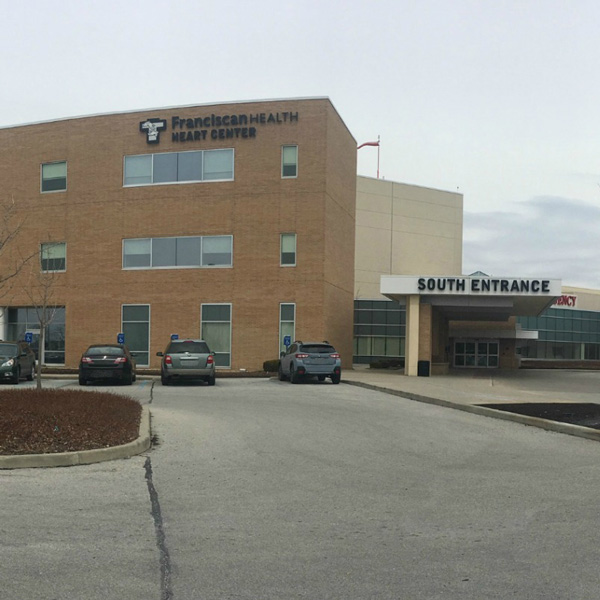
Address
1701 S. Creasy Lane
Lafayette, IN 47905
Fax: 765-502-4421
Appointments
Request An Appointment


